Compliance & clarity
Dual Pricing, Cash Discount & Surcharging: A Compliance Checklist
A compliant program is not a sticker on the door. It is a chain of decisions: how prices are posted, how the terminal routes debit, what receipts say, and what your team repeats at the register. Skip a link and you may not get a friendly reminder first. Card-brand enforcement can assess fines that commonly start around $1,000 per location or incident.
Merchants often treat compliance as a one-time setup task. In practice, it is ongoing. Staff turnover, POS updates, menu reprints, and a busy Saturday can undo careful work from onboarding. The checklist below is operational: things you can verify monthly without a law degree. This is general information, not legal advice. Confirm program details with your processor and advisors.
Name the program correctly
Dual pricing, cash discount, and credit surcharging are different workflows. Mixing labels confuses customers and auditors. Pick one name, use it on signage, in training, and on receipts. If your counter says “card price,” do not train staff to call it a “surcharge” unless that is what the program actually is.
- Dual pricing: two posted prices, cash and card, visible before payment.
- Cash discount: the posted price is the card price; cash payers receive a discount from that amount.
- Credit surcharging: an additional amount on eligible credit transactions, within brand caps where permitted.
Disclosure before the tender
Customers should see the pricing story before they choose how to pay. That can mean shelf tags, menu boards, entry signage, or a clear line on invoices for card-not-present orders. Receipt footers alone are not enough if the guest never saw the posted price that matches what printed.
Debit is not credit
PIN, signature, and wallet-routed debit do not follow the same rules as credit surcharging. Flat “percent on everything” shortcuts are a common source of violations. Your terminal or POS should enforce tender detection automatically. Remove manager overrides that defeat those guardrails unless your provider documents a compliant reason.
Receipts and training must match
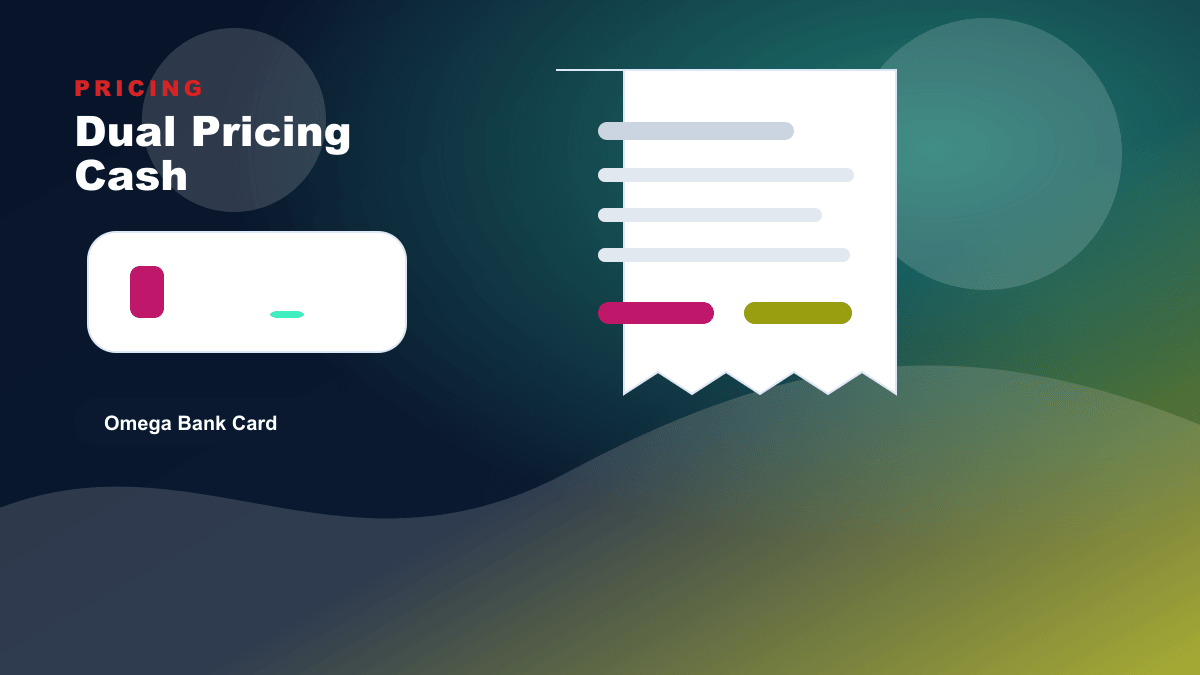
Run test transactions for credit, debit, and cash. Compare what the customer saw, what the PIN pad showed, and what the receipt says. Shift leads should know where the one-page program summary lives and who to call when something looks off.
Why fines often arrive without a warning
Card brands monitor compliance through audits, mystery shopping, and customer complaints. When a violation is confirmed, assessment letters can show up with fines that often start around $1,000 per location or incident. There is rarely a “fix it for free this time” letter first. That is why merchants who treat compliance as a quarterly checklist—not a launch-day task—stay out of trouble.
- Document your program type, cap, and effective date in one internal file.
- Re-run test transactions after every POS or terminal update.
- Audit a week of receipts monthly for debit mis-routing or missing disclosure.
- Retrain staff when signage or menu prices change.
- Keep processor setup notes and brand registration confirmations on file.
Omega Bank Card Services walks Georgia merchants through compliant dual pricing and related programs with plain-language setup notes your team can actually use. If you are unsure whether your current setup matches what you tell customers, we can review it before a letter arrives.
Compliance is boring until it is expensive. A short checklist, run regularly, costs less than a single assessment fine and keeps checkout trustworthy for the guests who keep coming back.
Compliance is operational—not a PDF in a drawer
Payment compliance shows up at the register: posted prices, receipt language, tender routing, staff scripts, and how refunds appear on customer statements. When marketing calls a program "surcharge" but the POS applies fees to debit, exposure accumulates quietly until a brand complaint or network notice arrives.
Georgia merchants should document program type, cap, effective date, and training acknowledgments in one internal file. Our compliance checklist covers cash discount, dual pricing, and surcharging patterns side by side—not as interchangeable buzzwords.
Omega Bank Card issues setup notes merchants can hand to shift leads: what the program is called, which tenders it touches, and where customers first see the price that matches the receipt.
PCI scope follows how data touches your systems
PCI is not a single checkbox. SAQ type depends on whether card data is fully outsourced to a hosted page, entered on a standalone terminal, or typed into a PC-based virtual terminal. Adding ecommerce, mobile swipers, or billing-on-file can change your questionnaire overnight.
Read PCI in plain English and which SAQ type you need. Pair gateway tokenization from our gateway hub with staff training so card numbers do not land in email or spreadsheets.
Non-compliance fees on statements are often avoidable with timely attestation and sensible device hygiene—unique logins, supported hardware, and no shared passwords on POS stations.
- Revisit SAQ type when you add ecommerce or stored cards.
- Keep processor compliance notices with your attestation PDFs.
- Train new hires on tender rules before their first solo shift.
- Match receipt descriptors to storefront branding customers expect.
Reduce disputes with clear customer communication
Many chargebacks are confusion events, not fraud. Clear descriptors, emailed receipts, return policies on the website, and consistent refund timing prevent "I do not recognize this" disputes that hurt your ratio and invite monitoring.
Chargebacks 101 explains representment basics. compliance checklist and program guide adds context for your specific program or industry.
Need a second set of eyes on signage and terminal settings? Request a review or start with a statement audit so pricing and compliance align on the same facts.
Common questions merchants ask about this topic
Merchants researching "Dual Pricing, Cash Discount & Surcharging: A Compliance Checklist" usually want three answers: what will I actually pay after fees, what changes at the register, and what happens if something goes wrong with a chargeback or compliance notice. Those answers live on your statement and in your terminal settings—not in a generic rate quote.
Omega Bank Card recommends a quarterly fifteen-minute review: effective rate trend, new line items, batch closeout discipline, and whether your PCI attestation is current. Small fixes often beat processor churn. When churn does make sense, move with statement math and a documented migration checklist so deposits do not gap during the switch.
Still comparing options? Browse more articles on the Omega blog, explore credit card processing services, or request a free statement audit to ground the conversation in your real numbers.
- How do I calculate effective rate? Total fees ÷ card sales for the same period.
- When should I switch processors? When transparency or service blocks fixes—or savings clear your switching cost hurdle.
- Does Omega support my industry? We serve retail, restaurants, healthcare-adjacent, field service, ecommerce, and high-risk verticals with sponsor-bank fit reviewed up front.
- Where do I start? Get started or fee check with a recent PDF statement.
A sustainable review rhythm keeps costs predictable
One-time processor shopping fixes yesterday’s rate—not next quarter’s card mix. Set a recurring calendar reminder to export your statement PDF, recalculate effective rate, and note any new line items. Hidden fees often appear after promotional periods end, equipment leases begin, or PCI non-compliance triggers monthly penalties.
Pair financial review with operational review: Are managers batching terminals on schedule? Is keyed entry limited to true phone orders? Are ecommerce descriptors recognizable? Those habits affect compliance & clarity businesses as much as basis-point negotiations—especially when rewards cards dominate weekend volume.
Omega Bank Card serves Atlanta-area merchants and businesses nationwide. Whether you need gateways for online sales, wireless terminals for field teams, or high-risk underwriting reviewed up front, anchor decisions in statement math—not slogans. Get started when you want a partner who documents recommendations in writing.
- Compare this month’s effective rate to the same month last year—not only to last month.
- Archive processor change letters; they explain new fees months later.
- Train seasonal staff on EMV and tap before peaks, not during them.
- Keep related blog guides bookmarked for your finance lead and floor manager.
Put the checklist to work this week
Knowledge only helps when it changes a habit or a contract term. Block thirty minutes with your manager or bookkeeper: pull last month’s statement, mark any line you cannot explain, and list checkout scenarios that still rely on keyed entry. That short exercise usually surfaces more savings than another round of generic rate quotes.
If this article overlaps with companion guide and follow-up read, read both before you call your processor—armed questions get clearer answers. Omega’s free statement audit is built for that conversation: we translate dense PDFs into decisions you can make without a payments engineering degree.
When you are ready to compare structured options—not just swap one teaser rate for another—contact Omega Bank Card. We will map dual pricing, cash discount & surcharging: a compliance checklist to the processing model, hardware, and compliance posture you actually run today.
Comments
Loading comments…
Related reads
Compliance & clarity
Surcharging in 2026: What to Prove at the Register Before You Print New Signs
A 2026-focused look at surcharging for Georgia retailers: how checkout models differ, why debit is handled separately, where disclosures must show up, multi-state sales, and the records worth keeping. General information, not legal advice.
Programs compared
Dual Pricing vs. Surcharging: What Georgia Merchants Should Understand
Dual pricing compared to surcharging for Georgia merchants: compliance basics, customer experience, and how to choose a model that fits your checkout.
Programs compared
Cash Discount vs. Dual Pricing: What Georgia Merchants Should Know
Cash discount versus dual pricing for Georgia merchants: how posted prices work, customer messaging, debit considerations, and choosing a compliant checkout model.
Want a second opinion on your statement?
We review what you pay today, line by line, and show how transparent pricing compares-no obligation to switch.
Get a Free Statement Audit