Pricing models
Interchange Categories in Plain English: Restaurant vs Grocery vs Retail
Interchange is not one percentage. Networks publish categories by merchant type, how the card is taken, and what kind of card it is. A $40 restaurant tab, a $40 grocery basket, and a $40 boutique bag can clear in different buckets even on the same Visa. That is why “what’s your rate?” is the wrong first question.
MCC is the starting gate
Your merchant category code tells the network what kind of business you are. Restaurants, supermarkets, and general retail have different published interchange programs. Mis-coding (a café boarded as retail, a market boarded as restaurant) can make statements look “wrong” even when the processor is doing what the MCC allows. Fixing MCC is an underwriting conversation, not a spreadsheet trick.
How the ticket was taken
Card-present chip and tap usually qualify better than keyed or ecommerce. Grocery often sees a lot of regulated debit. Restaurants see tips and rewards cards at dinner. Retail sees a mix of private-label, rewards, and returns. PIN debit is a lever at grocery and QSR more than at a jeweler.
Tiered pricing hides this in qualified/mid/non-qualified labels the ISO controls. Interchange-plus shows network cost plus markup. Tiered versus IC+ is the model choice.
- Do not compare a restaurant quote to a retail friend’s “rate.”
- Amex OptBlue and Discover have their own schedules on many small-merchant programs.
- Level 2/3 data can help some B2B retail—not a café tab.
- Effective rate across a month is still the comparison number that matters.
What Omega does with categories
We do not rewrite Visa’s published tables. We make sure your MCC, capture method, and pricing model are not fighting each other. Send a statement. If you are grocery, restaurant, or retail in Georgia or nationwide, say so—the mix changes the story.
Stop shopping a single percentage
Call (866) 663-4204. Get started. Bring industry and a PDF, not a competitor’s cocktail-napkin rate.
Statements tell the truth your sales quote did not
Merchant statements are dense because card processing is dense—but the story reduces to a few questions: What did networks charge? What did my processor earn? What fixed fees appeared that nobody mentioned on the call? When those answers are buried in tier names, merchants overpay for years.
Learn to read a processing statement line by line, then calculate effective rate monthly. That single percentage anchors every pricing conversation—whether you stay put or move to interchange-plus.
Omega Bank Card publishes transparent interchange-plus statements so interchange, assessments, and markup are separable. That makes month-over-month comparisons honest when your card mix shifts.
Pricing models create different blind spots
Tiered plans bucket transactions into qualified, mid-qualified, and non-qualified labels processors control. Flat-rate plans hide network variation inside one percentage. Interchange-plus exposes network cost and processor markup separately—busy to read, easier to audit.
What interchange-plus means, tiered vs interchange-plus, and when flat rate stops making sense cover the structural trade-offs. None is free; each trades simplicity for visibility differently.
Programs that offset processing—cash discount, dual pricing, compliant surcharging—change customer-facing price presentation, not interchange itself. Pair any program with Georgia dual pricing vs surcharging guidance before reprinting menus or signage.
- Track effective rate in a spreadsheet tab—not memory.
- Separate in-store, online, and keyed volume when diagnosing spikes.
- Ask processors to itemize PCI, regulatory, and batch fees.
- Reconcile POS gross card sales to statement volume every month.
Turn insight into savings without churn for churn’s sake
Sometimes the fix is operational: EMV capture, batch timing, AVS on keyed invoices. Sometimes it is structural: leaving tiered pricing for interchange-plus. Sometimes it is contractual: removing junk fees that crept in after year one.
See pricing deep dive and fee checklist and hidden fees to watch for before your next renewal call. Bring questions, not just frustration—specific line items get specific answers.
Send us a redacted statement. We will show where dollars leak and whether Omega can beat your effective rate with cleaner terms.
Common questions merchants ask about this topic
Merchants researching "Interchange Categories in Plain English: Restaurant vs Grocery vs Retail" usually want three answers: what will I actually pay after fees, what changes at the register, and what happens if something goes wrong with a chargeback or compliance notice. Those answers live on your statement and in your terminal settings—not in a generic rate quote.
Omega Bank Card recommends a quarterly fifteen-minute review: effective rate trend, new line items, batch closeout discipline, and whether your PCI attestation is current. Small fixes often beat processor churn. When churn does make sense, move with statement math and a documented migration checklist so deposits do not gap during the switch.
Still comparing options? Browse more articles on the Omega blog, explore credit card processing services, or request a free statement audit to ground the conversation in your real numbers.
- How do I calculate effective rate? Total fees ÷ card sales for the same period.
- When should I switch processors? When transparency or service blocks fixes—or savings clear your switching cost hurdle.
- Does Omega support my industry? We serve retail, restaurants, healthcare-adjacent, field service, ecommerce, and high-risk verticals with sponsor-bank fit reviewed up front.
- Where do I start? Get started or fee check with a recent PDF statement.
A sustainable review rhythm keeps costs predictable
One-time processor shopping fixes yesterday’s rate—not next quarter’s card mix. Set a recurring calendar reminder to export your statement PDF, recalculate effective rate, and note any new line items. Hidden fees often appear after promotional periods end, equipment leases begin, or PCI non-compliance triggers monthly penalties.
Pair financial review with operational review: Are managers batching terminals on schedule? Is keyed entry limited to true phone orders? Are ecommerce descriptors recognizable? Those habits affect pricing models businesses as much as basis-point negotiations—especially when rewards cards dominate weekend volume.
Omega Bank Card serves Atlanta-area merchants and businesses nationwide. Whether you need gateways for online sales, wireless terminals for field teams, or high-risk underwriting reviewed up front, anchor decisions in statement math—not slogans. Get started when you want a partner who documents recommendations in writing.
- Compare this month’s effective rate to the same month last year—not only to last month.
- Archive processor change letters; they explain new fees months later.
- Train seasonal staff on EMV and tap before peaks, not during them.
- Keep related blog guides bookmarked for your finance lead and floor manager.
Put the checklist to work this week
Knowledge only helps when it changes a habit or a contract term. Block thirty minutes with your manager or bookkeeper: pull last month’s statement, mark any line you cannot explain, and list checkout scenarios that still rely on keyed entry. That short exercise usually surfaces more savings than another round of generic rate quotes.
If this article overlaps with companion guide and follow-up read, read both before you call your processor—armed questions get clearer answers. Omega’s free statement audit is built for that conversation: we translate dense PDFs into decisions you can make without a payments engineering degree.
When you are ready to compare structured options—not just swap one teaser rate for another—contact Omega Bank Card. We will map interchange categories in plain english: restaurant vs grocery vs retail to the processing model, hardware, and compliance posture you actually run today.
Comments
Loading comments…
Related reads
Pricing models
What Is Interchange-Plus Pricing?
Interchange-plus pricing explained: what interchange is, what the “plus” covers, and why this model is easier to audit than tiered processing rates.
Pricing models
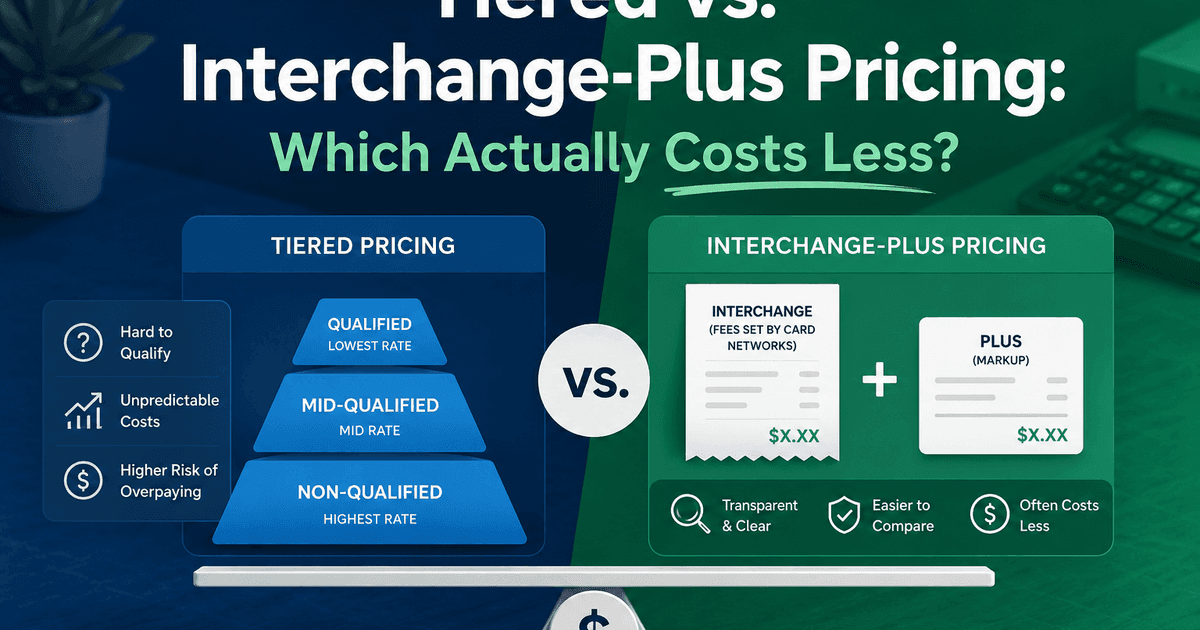
Tiered vs. Interchange-Plus Pricing: Which Actually Costs Less?
Compare tiered and interchange-plus credit card pricing: how qualified rates hide cost, when interchange-plus wins, and how to calculate your real effective rate.
Pricing models
Debit Routing and PIN Debit: Why Some Tickets Cost More Than Others
PIN debit versus signature debit, debit routing, and why two $40 tickets can price differently on the same statement. What staff habits change.
Want a second opinion on your statement?
We review what you pay today, line by line, and show how transparent pricing compares-no obligation to switch.
Get a Free Statement Audit